
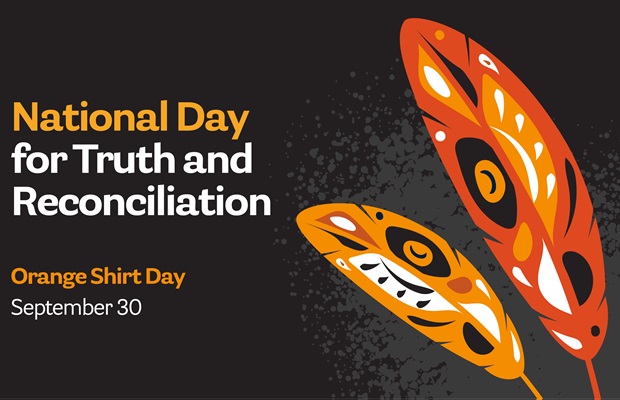
On September 22, we moved into the Autumn Equinox, which marks a sacred space for maintaining balance, gratitude, and preparations for winter. It is fitting that this season has been chosen to acknowledge the National Day for Truth and Reconciliation, a day to honor residential school survivors, their families and the children who did not return home.
For some indigenous survivors, September is a hard month, as the survivor may be triggered by past events in his or her lifetime. Many students who attended residential schools are left with intergenerational impacts of the residential school. In 2021, the federal government declared September 30 as the National Day for Truth and Reconciliation. September 30th is also Orange Shirt Day, which was created by Phyllis Webstad in honor of her story of having her orange shirt taken away on her first day at the residential school.
Because this is a difficult month for many indigenous people, there are many ways to support people through reconciliation that include:
- Wear an orange shirt to raise awareness of the intergenerational trauma
- Attend a local community event
- Go to the local bookstore and purchase a book
- Start a conversation about reconciliation or provide education
- Wear a pin
- Buy an “Every Child Matters” window decal and proudly display it
- Support the Orange Shirt Society with a donation or request a workshop
- Watch a documentary to better understand the history of residential schools or buy a book
- Participate in a sacred fire or smudge to build relationships in your community with indigenous people
Indigenous elders often share stories about their experiences in residential school. Therefore, it is important to recognize that elders are knowledge keepers, and when they share a story, it is important to be respectful. This includes active listening, no interruptions, and listening with an open heart and mind.
In September, we recognize the shift in weather to cooler evenings and foggy mornings. For some, this signifies a traumatic time in their lives as past memories come back to haunt them. If you know a survivor who is triggered, it is important to provide support.
5 ways to support a survivor who is experiencing triggers include:
- Remain calm, be present, and provide active listening.
- Provide a safe, calm space without judgement.
- Advocate: Offer help and refer to Walmsley.
- Provide education on how to ground oneself through yoga, exercise, stillness, meditation, self-care, journaling, massage, breathing and breathwork.
- Do a grounding exercise. Ask them where in their body they feel tension; have them take a deep breath in through their nose into the spot where they feel tension, release the breath through their mouths and repeat 3-4 times.
Reconciliation begins with all people and, like petals on a flower, each petal represents steps we can take to start the process: safety, commitment, trust, transparency, active listening, non-judgement, accountability and acceptance.
If you are struggling or know of someone who is triggered at this time of year, please reach out to Walmsley EFAP, who can assist in the healing journey.
Harriet Hird MACP, RCC, BSW
Walmsley EFAP counsellor