
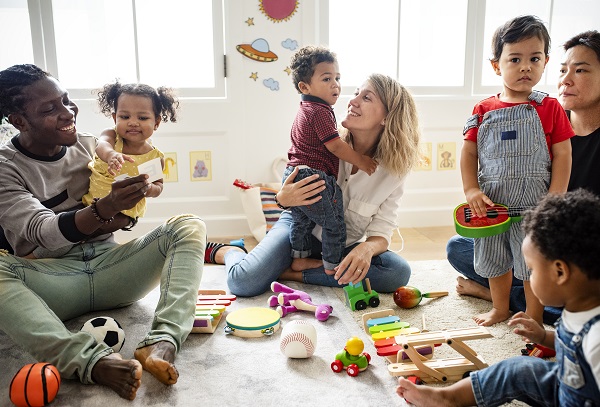
The word “family” comes with a lot of emotional attachment to it, and for good reason. Conjured in the mind for some upon hearing it are feelings of safety, security, love, and support; all unconditional. For others, however, there are more complicated thoughts and feelings, and not always positive ones. There are those who have been estranged from their family members, or had to set strict boundaries with them. For some, the word “family” carries pain and hurt. The definition of family has had to grow and evolve with the rapidly changing times in which we live. Older generations had the expectation of a nuclear family consisting of two parents and their offspring. Nowadays, the definition of family encompasses a wide variety of dynamics and relationships.
Here in Canada, there have been changing views of families over the decades. With the divorce climbing steadily over time, there has been an increase in single-parent homes, mostly headed by women. According to Stats Canada, as of 2021 there were almost 2 million single parent households in Canada, and that number has been steadily increasing for over a decade. With that, families have shifted to meet these needs: more people are having grandparents help with childcare, some living in the home or close by. If that isn’t an option, families are coming together to help and support each other, expanding on the notion of “it takes a village to raise a child.” The Canadian census has also shown that children are staying at home longer, choosing to live at home while attending postsecondary school or working, since housing is becoming more and more expensive and out of reach for many. No longer is there an expected trajectory of moving out right away, with more families remaining multigenerational in one home to meet the everyone’s needs.
Families are less frequently defined by blood relations as well. Blended families are becoming increasingly common, making up almost 13% of all families according to the 2011 Canadian census. This comes, of course, with unique challenges of integration and communication; blending people, opinions, traditions, and sometimes cultures can be a laborious but ultimately rewarding experience, creating a new dynamic for future generations. Chosen families are also becoming more frequent. For those who have had difficulty with family members, they may choose to surround themselves with supportive friends who understand their struggles and can relate in a deep and meaningful way. This is particularly true in the LGBTQ community, where there is a higher likelihood of familial disruption leading to seeking support and bonding with those who have experienced similar hardships.
Canada is also home to several cultures where family does not necessarily have the same definition. Indigenous families are often defined through marriage, birth, and additionally, history. Collectivism is at the heart of many Indigenous families, with tribes forming tight knit groups that support one another without necessarily relying solely on blood relations. Challenges to this way of life have resulted in horrific acts of violence from colonizers attempting push a more Eurocentric idea of family onto Indigenous peoples. That narrow and damaging viewpoint on family dynamics are prevalent to this day, where individualistic family ideals still remain strong.
We must all do our part to understand and accept the evolving definition of family. This process will take compassion, empathy, and a listening ear in order to avoid judgement or prejudice. Family is a concept that expands with the container it is placed in. No longer is it defined by blood relations or old-fashioned values, and the sooner we accept that, the sooner we can accept each other.
Rob Baker, MA RCC
Walmsley EFAP